Steel vs. Aluminum: Which Is Better for UTV Accessories?

When comparing steel vs aluminum UTV accessories, material is often one of the first differences you notice. A bumper may use formed steel, while a roof, enclosure, or fender kit is made from aluminum.
Is one material better? Not across the board.
Steel generally provides more strength and stiffness for the money. Aluminum reduces weight and naturally resists corrosion. The better choice depends on what the accessory must do, where it is mounted, and the forces it will encounter.
The Short Answer
Steel is commonly used for accessories that must absorb impacts, support recovery equipment, or carry substantial loads:
-
Bumpers
-
Winch mounts
-
Tire carriers
-
Rock sliders
-
Heavy cargo racks
Aluminum works well where lower weight, corrosion resistance, or precise shaping matters more than maximum impact strength:
-
Roofs
-
Doors and fender panels
-
Grilles and vents
-
Skid plates
-
Trunk enclosures
-
Billet controls and suspension components
These are guidelines, not absolute rules. Material grade, thickness, shape, weld quality, mounting points, and overall engineering can matter more than whether a part is labeled steel or aluminum.
Are Steel or Aluminum UTV Accessories Better?
For impact protection and load-bearing parts like bumpers, winch mounts, tire carriers, and rock sliders, steel is usually the better choice for UTV accessories. For roofs, doors, fender panels, and enclosures, aluminum is usually better because it cuts weight and resists corrosion. Many of the strongest builds use both, matching each material to what the part actually has to do.
Strength Is About the Complete Design
Steel is stronger and stiffer than aluminum when comparing pieces of similar thickness and shape. That makes it useful when a compact structure must resist bending or manage concentrated loads.
An aluminum component can still be strong, but it may require thicker material, reinforcing bends, ribs, or a larger cross-section. Because aluminum is much lighter by volume, designers can add thickness without necessarily making the finished part heavier than a steel equivalent.
Before choosing either material, consider:
-
Where and how the accessory mounts
-
Whether it is formed, boxed, welded, or reinforced
-
If it will face impacts, vibration, abrasion, or heavy loads
-
Whether the manufacturer provides a load or recovery rating
A well-designed accessory uses its material efficiently. Simply adding more metal does not guarantee better protection.
Aluminum Helps Control Weight
Aluminum is roughly one-third the density of steel. Finished aluminum parts are not always one-third the weight because they may use thicker material, but the savings can still be meaningful.
A bumper, winch, rock sliders, skid plates, tire carrier, spare tire, tools, and cargo can add hundreds of pounds to a complete build. That additional weight can affect:
-
Acceleration and braking
-
Suspension ride height
-
Shock performance
-
Cornering
-
Payload capacity
-
Fuel consumption
Placement matters too. Weight added to the roof or behind the rear axle generally has more effect on handling than weight mounted low and near the center of the chassis.
This is one reason aluminum makes sense for roofs, upper body panels, doors, fender extensions, and storage enclosures. It limits weight in areas where extra mass may be particularly noticeable.
Steel Handles Concentrated Loads Well
Bumpers, rock sliders, winch mounts, and tire carriers must manage concentrated forces. These parts may strike rocks or trees, support a heavy spare tire, or transfer recovery loads into the chassis.
Steel is frequently selected because it provides substantial strength and stiffness in a compact structure.
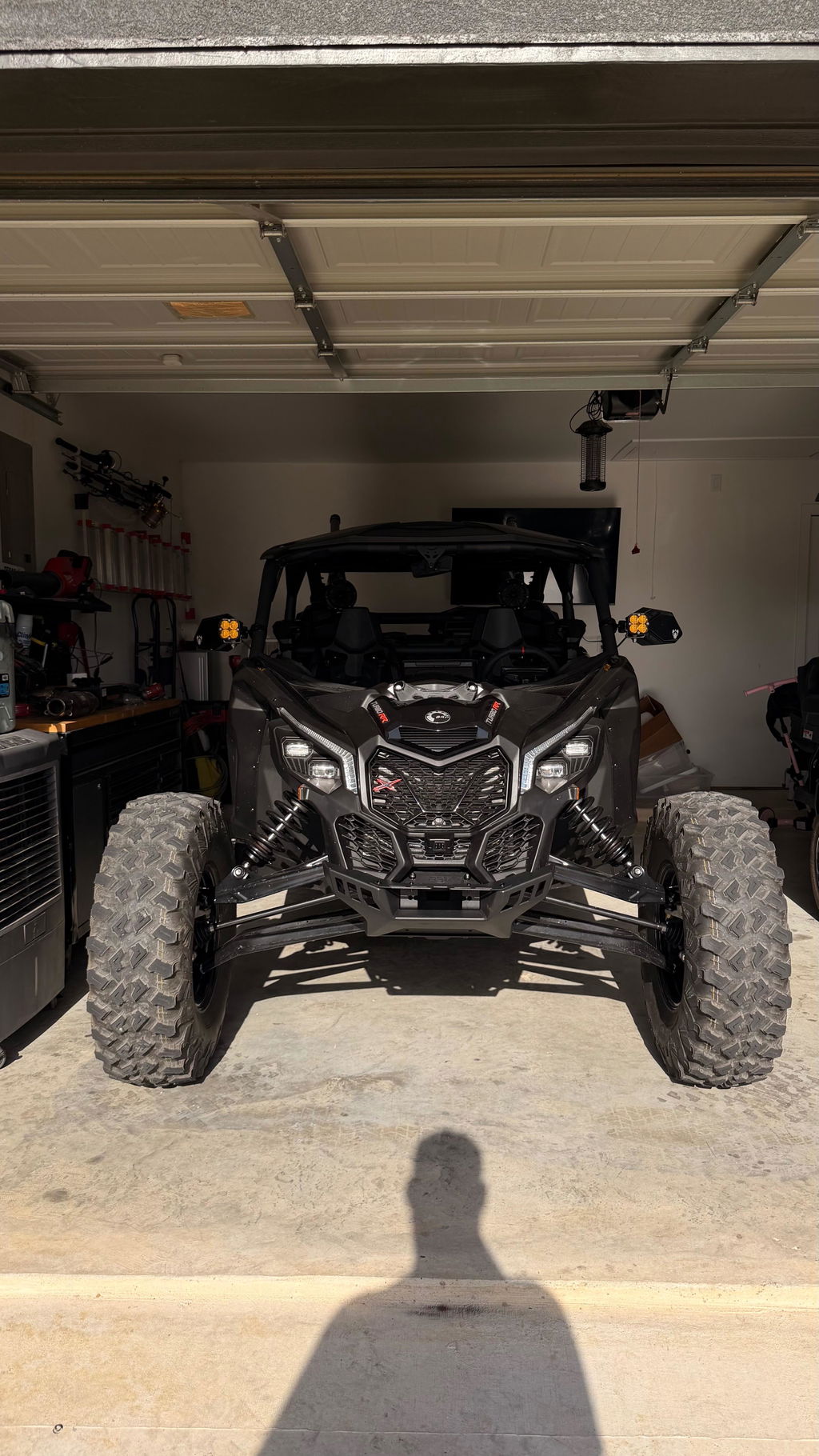
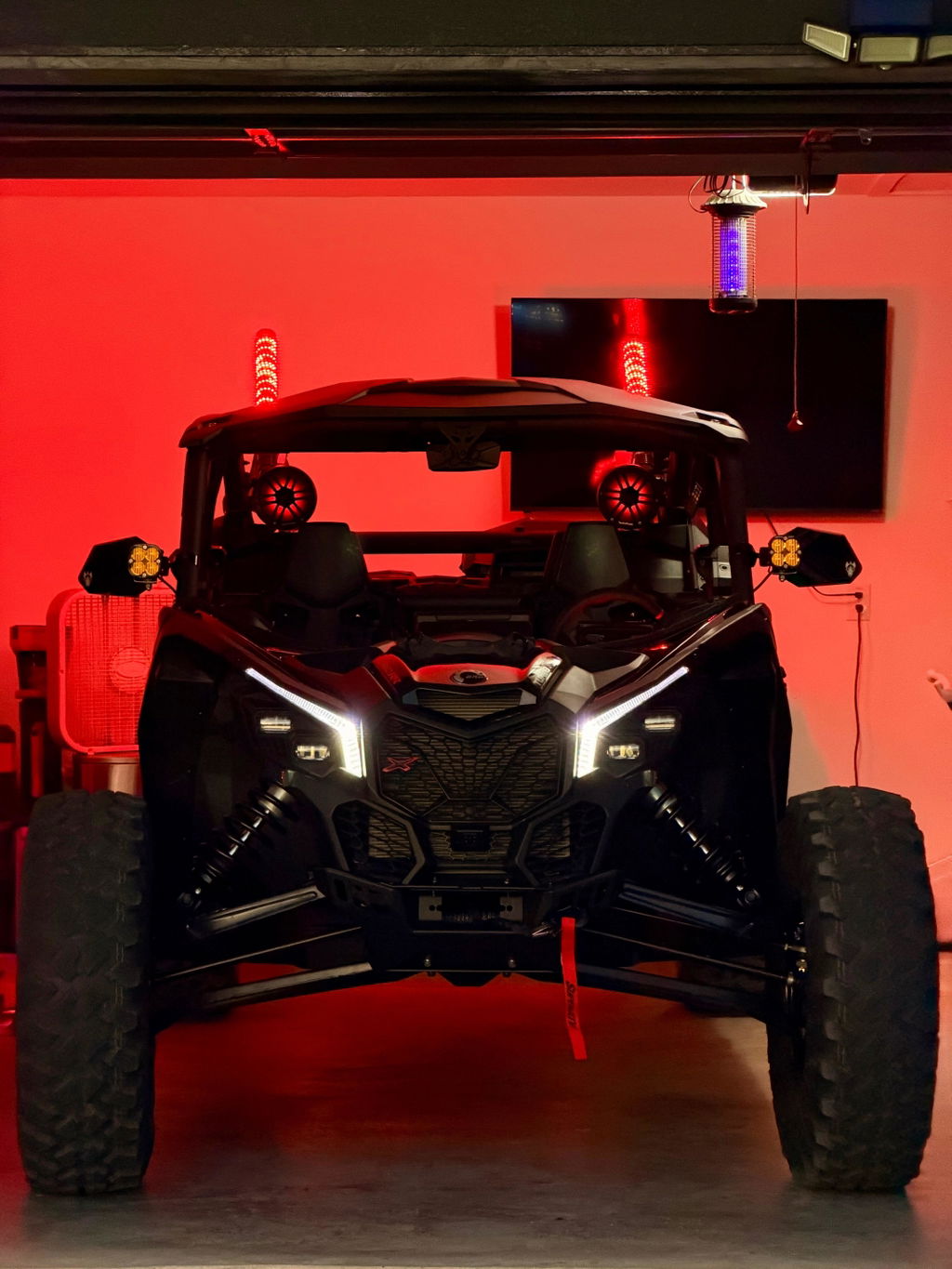
The DRT rear bumper for the Can-Am Maverick R, for example, uses laser-cut, formed, and welded steel for its primary structure. Removable aluminum mesh inserts provide a lighter finishing element that can be customized to match the vehicle.
The DRT Desert Runner winch bumper for the Polaris RZR Pro R, Pro S, and Turbo R takes a similar approach. Its load-bearing structure is made from formed steel, while billet aluminum is used for the skid plate, end caps, and trim.
Mixed-material construction can provide a better result than forcing one material to handle every part of the job.
Corrosion Resistance
Bare steel can rust when exposed to moisture and oxygen. Mud, road salt, wet storage, and rock damage can increase that exposure.
Quality steel accessories are typically protected by powder coating, paint, plating, or another finish. If the coating is chipped deeply enough to expose bare metal, the area should be cleaned and touched up.
Aluminum does not rust like steel. It develops a protective oxide layer, making it useful in wet, muddy, coastal, and humid environments. However, aluminum can still corrode, especially when it remains in contact with dissimilar metals in the presence of moisture.
Proper fasteners, washers, and material isolation can help control galvanic corrosion. Regardless of material, wash away mud and salt, inspect damaged finishes, and check mounting hardware regularly.
Steel vs. Aluminum Bumpers
A bumper must provide coverage without adding unnecessary weight or reducing ground clearance.
Steel is commonly used because it can create a rigid structure while supporting features such as:
-
Winch mounts
-
Recovery provisions
-
Light mounts
-
Skid plates
-
Replaceable panels
Aluminum can reduce bumper weight but may require additional thickness or reinforcement around high-load areas. When comparing bumpers, examine the mounting system, coverage, clearance, and intended use—not just the material.
For a winch bumper, confirm that the winch plate and chassis mounts are engineered for recovery loads. Appearance alone does not establish capacity.
DRT’s UTV bumper buyer’s guide for different riding styles offers additional guidance on selecting the appropriate coverage and features.
Practical choice: Steel usually makes sense for bumpers expected to face hard contact or support a winch. Aluminum may be appropriate when reducing weight is the greater priority and the design is properly reinforced.
Steel vs. Aluminum Rock Sliders
Rock sliders may strike ledges, drag across rocks, or briefly support part of the UTV’s weight.
Steel is commonly used because it combines strength, stiffness, wear resistance, and repairability. It can be formed into tubing or boxed structures that transfer impacts into strong chassis mounting points.
Aluminum sliders reduce weight and resist corrosion, but repeated grinding can remove material. Severe impacts may also gouge, deform, or crack the structure.
Mounting design remains critical. A strong slider cannot distribute an impact effectively if it is attached to weak or poorly positioned mounting points.
For more help deciding whether your machine needs this protection, read Rock Sliders 101: Do You Really Need Them?.
Practical choice: Steel generally makes more sense for frequent rock contact. Aluminum may work for lighter protection where controlling weight is a greater concern.

Steel vs. Aluminum Skid Plates
Skid plates face impact, abrasion, vibration, and sliding contact, so the choice is less straightforward.
Steel resists punctures and concentrated impacts but can add considerable weight to a full-coverage system. Aluminum provides a useful balance of protection and weight, although repeated contact can gouge or bend it.
UHMW plastic offers a third option. It is lightweight, abrasion resistant, and tends to slide across rocks instead of catching on them.
The right choice depends on your terrain, the amount of coverage you need, and how much weight you are willing to add. DRT’s explanation of why skid plates matter for off-road riding covers the vulnerable components underneath a UTV.
Practical choice: Aluminum is a useful middle ground for many skid-plate applications. Steel works well in compact areas exposed to concentrated impacts, while UHMW is well suited to full coverage and sliding over terrain.
Roofs, Doors, and Enclosures
A roof must resist wind, vibration, branches, and weather without placing unnecessary weight above the occupants. Aluminum is well suited to that job because it is light, corrosion resistant, and can be formed with bends that add stiffness.
It also works well for doors, fender panels, and cargo enclosures. These parts need enough rigidity to hold their shape without consuming too much of the vehicle’s payload capacity.
Large metal panels can resonate or rattle regardless of material. Formed channels, mounting isolators, seals, and secure fasteners are important for controlling noise.
Steel may still be used for an underlying rack or support structure, especially if it carries a spare tire or heavy cargo.
Practical choice: Aluminum generally makes sense for roof skins, door and fender panels, and enclosures. Steel may be preferable for the load-bearing framework.
Where DRT Uses Aluminum
DRT uses aluminum when an accessory needs useful strength and coverage without unnecessary weight.
The DRT aluminum fender kit for the Polaris XPEDITION is made from laser-cut, formed, and welded 5052 aluminum. It extends protection from rocks, mud, and sand while keeping weight under control. Removable rear mesh inserts also allow the fenders to be configured for more airflow or more complete coverage.
For cargo management, the DRT aluminum trunk enclosure for the RZR XP 1000 and Turbo creates a secure storage area while maintaining the width and length of the factory cargo box. Its 0.090-inch load-bearing lid can also support additional cargo on top of the enclosure.
These products show why the material decision should follow the accessory’s function. Aluminum makes sense in both applications because it provides formed-panel strength, corrosion resistance, and manageable weight.

Tire Carriers and Cargo Racks
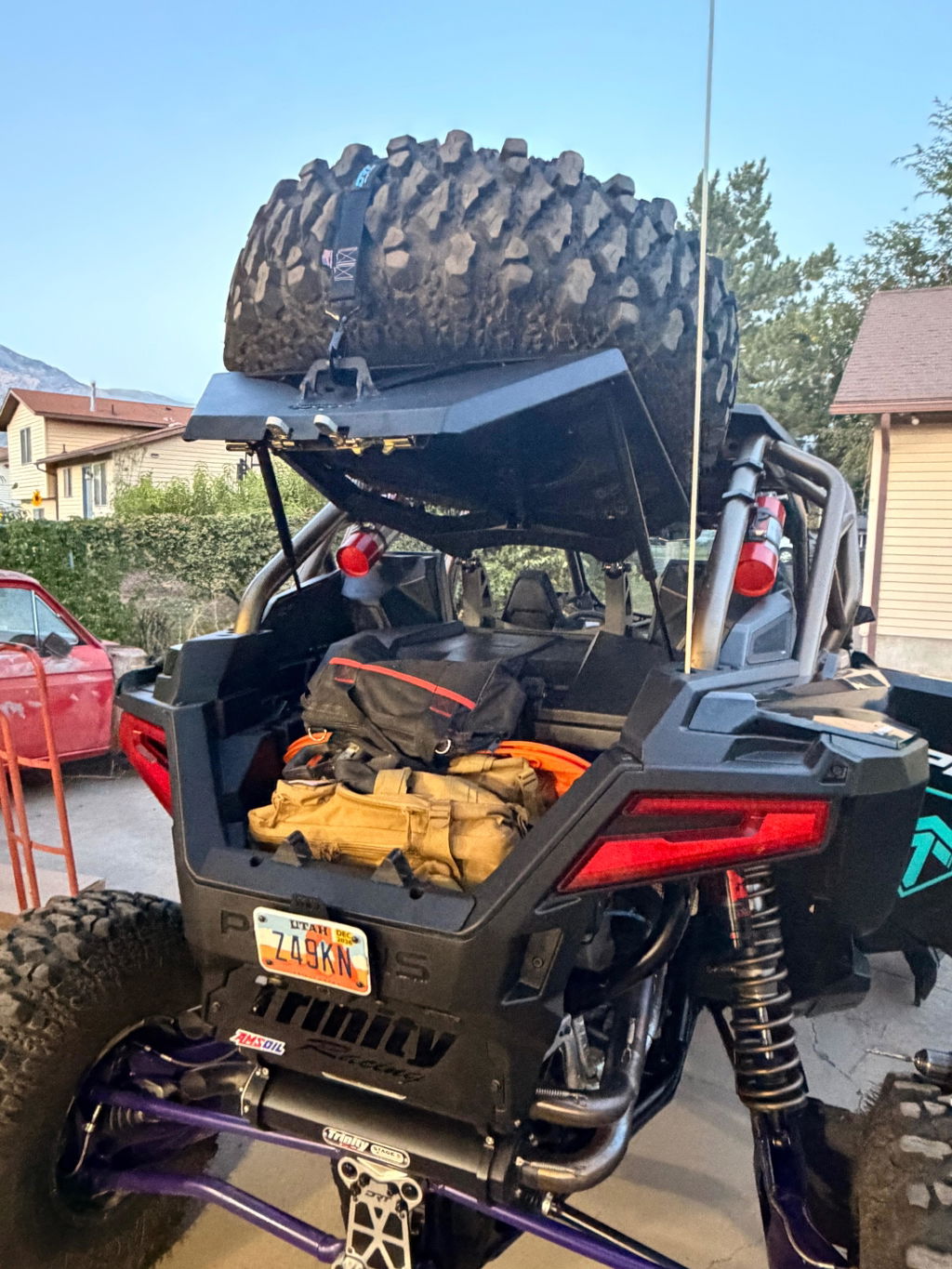
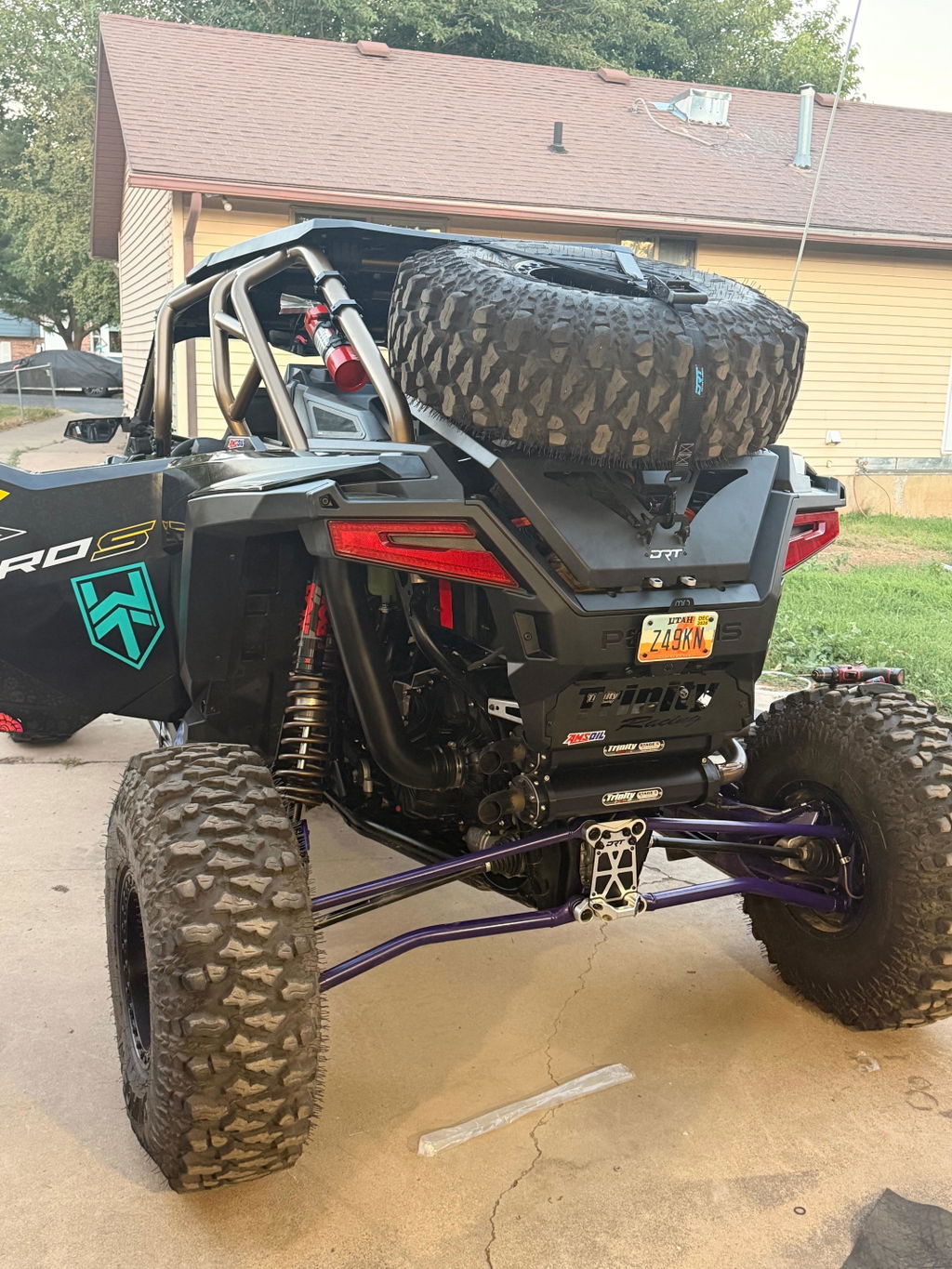
A tire carrier must manage more than the static weight of a spare. Every bump pulls the wheel and tire against the carrier and its mounting points. A large spare mounted behind the rear axle also creates leverage that repeatedly loads the structure.
Steel is often used because it provides the necessary stiffness without requiring an oversized assembly. Aluminum may still appear in cargo panels, covers, or trim where less concentrated loading allows weight to be reduced.
Regardless of material, pay attention to:
-
Maximum supported tire size
-
Cargo and weight limits
-
Hinge and latch design
-
Chassis mounting points
-
Compatibility with other accessories
Larger tires add weight and move some of that weight farther from the mounting structure. Do not assume that a carrier designed for a smaller factory-sized spare can safely support every oversized tire.
Practical choice: Steel generally makes sense for tire carriers and heavy cargo racks. Aluminum works well for lighter storage platforms, panels, and enclosures.

Where Billet Aluminum Fits
Not every aluminum accessory is made from sheet metal. Billet components begin as solid aluminum stock and are machined into their final shape.
CNC machining allows manufacturers to create precise contours, mounting surfaces, threads, and pockets. Billet aluminum is commonly used for:
-
Shift knobs
-
Grab handles
-
Radius rods
-
Tie rods
-
Mirror mounts
-
Clamps
-
End caps
-
Control components
Billet does not automatically mean stronger than steel. Its advantages include precision, corrosion resistance, controlled geometry, lower weight, and a clean finished appearance.
The alloy also matters. For example, 6061-T6 aluminum is widely used for machined UTV accessories because it offers a useful combination of strength, corrosion resistance, and machinability. Higher-strength alloys such as 7075-T6 may be chosen for more heavily loaded applications.
You can learn more about billet machining and formed steel production in DRT’s look inside the manufacturing of aftermarket UTV parts.
Which Material Is Better?
Steel is usually the practical choice when strength, stiffness, impact resistance, or load capacity comes first. Aluminum often makes more sense when reducing weight, resisting corrosion, or forming a lightweight panel is the priority.
For many UTV builds, the best answer is both.
A steel bumper can use aluminum trim. A steel tire-carrier frame can support an aluminum enclosure. An aluminum fender kit can use steel brackets where concentrated mounting loads require additional support.
Choose an accessory based on its complete design, mounting system, finish, and intended purpose. The goal is not to cover your UTV with the heaviest or lightest material available. It is to put the right material in the right place for the way you ride.
Frequently Asked Questions
Is steel or aluminum better for a UTV bumper?
Steel is usually the better choice for a UTV bumper that will face hard contact or support a winch, because it builds a rigid structure in a compact package. Aluminum can work when reducing weight is the priority and the design is properly reinforced. For a winch bumper, confirm the winch plate and chassis mounts are engineered for recovery loads.
Are aluminum UTV accessories strong enough?
Yes, when they are designed for the job. Aluminum parts may use thicker material, reinforcing ribs, or a larger cross-section to reach the needed strength. Because aluminum is about one-third the density of steel, designers can add thickness without necessarily making the finished part heavier than a steel equivalent.
Does aluminum rust like steel?
No. Aluminum does not rust the way bare steel does. It forms a protective oxide layer that helps it hold up in wet, muddy, and humid conditions. Aluminum can still corrode when it stays in contact with dissimilar metals in the presence of moisture, so proper fasteners and material isolation matter.
What is billet aluminum used for on a UTV?
Billet aluminum starts as solid stock and is CNC-machined into parts like shift knobs, grab handles, radius rods, tie rods, mirror mounts, and clamps. It is chosen for precision, corrosion resistance, controlled geometry, lower weight, and a clean finish, not because it is automatically stronger than steel.
Should I choose steel or aluminum skid plates?
Aluminum is a useful middle ground for many skid-plate applications, balancing protection and weight. Steel works well in compact areas exposed to concentrated impacts. UHMW plastic is a third option that is light, abrasion resistant, and slides across rocks instead of catching on them.