

- by Landon McMath
5 Expert Tips for Camping with Your UTV or SXS
- by Landon McMath
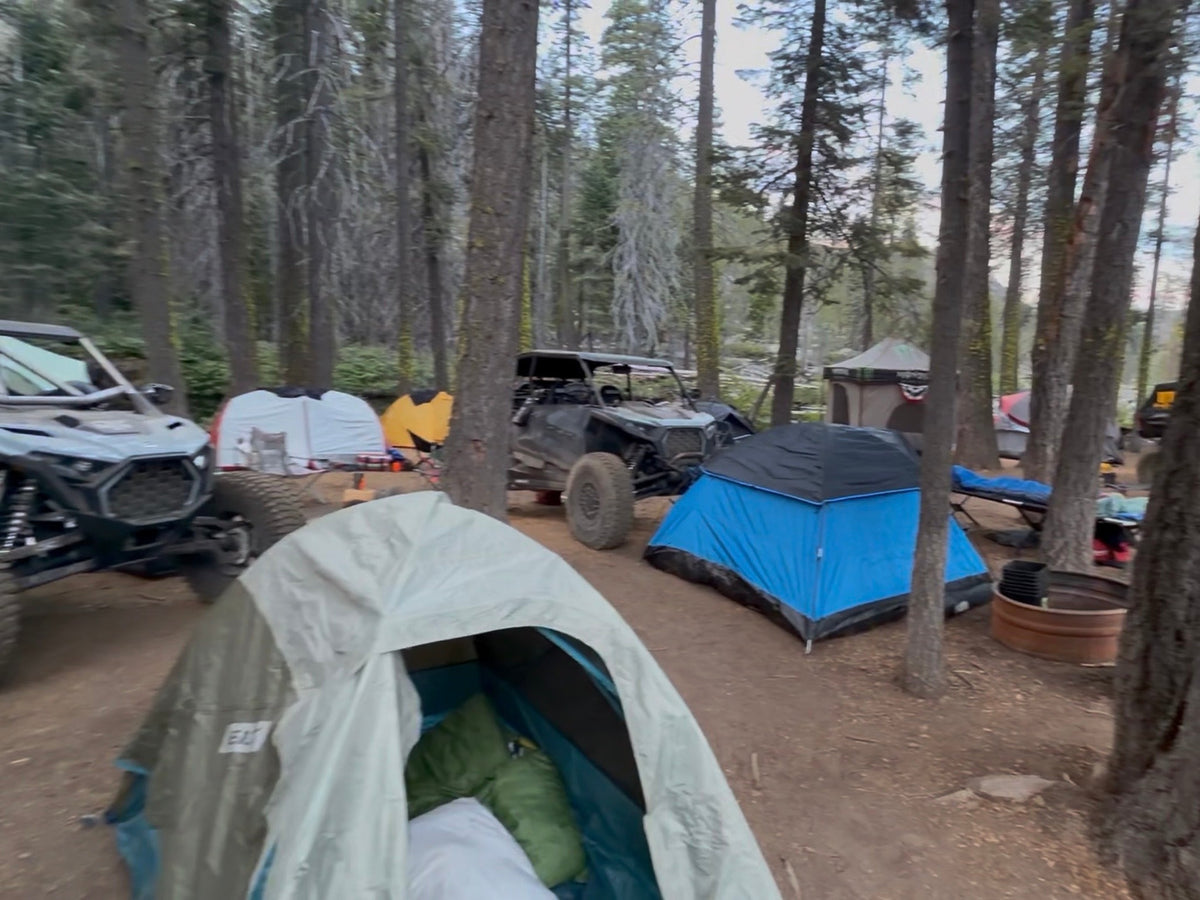
UTV camping takes more planning than a day ride. Start with a legal campsite and a route your loaded machine can handle. Then work out your water, shelter, storage, and return plan before filling the cargo bed.
Check with the land manager that the route is open to your vehicle class and that you can camp at your intended stop. Look for fire restrictions, food-storage rules, and current closures. Save an alternate campsite so you have somewhere to go if the first option is full or inaccessible.
Read the manual for the vehicle’s load limits and any separate cargo-bed rating. Count occupants, accessories, camping gear, and water as applicable to those limits. Place heavier items low and secure them at approved points. Test that boxes and bags leave the seats, restraints, and exits clear.
Pack a shelter and sleep system suited to the expected conditions. Keep a dry layer and a headlamp where you can reach them before setting up. Carry the tools and first aid in the same accessible spots you use on a day ride. Use the UTV packing list for those basics.
Bring drinking and cooking water unless you’ve confirmed a reliable source and have a treatment plan. Pack food and trash according to local storage rules, and use established campsites where required. Follow Tread Lightly’s UTV guidance on designated travel and minimizing impact.
Allow time to return before dark if you’re unfamiliar with the route. Share your route, alternate campsite, and check-in time with someone who can raise the alarm if needed.
Share:
Can-Am History: From Motocross to the Maverick R
Should You Upgrade Your UTV Front Bumper?